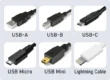


Video Outputs have been around for quite awhile. Getting into the legacy ports that don’t matter too much isn’t the topic of today’s post. This is to highlight more modern type cables.
Common Everyday ports you will see everyday
1. HDMI (High-Definition Multimedia Interface)
- What it is: The most ubiquitous standard for modern electronics. It carries both high-definition video and multi-channel audio on a single cable.
- Use Cases: Televisions, gaming consoles (PS5, Xbox), Blu-ray players, and cable boxes.
- Variations: Standard HDMI (Type A) is most common. Mini-HDMI (Type C) and Micro-HDMI (Type D) are used for tablets and cameras. [1, 2, 3, 4, 5]
2. DisplayPort
- What it is: The premier standard for PC gaming and high-end workstations. It is designed to push massive resolutions and extremely high refresh rates.
- Use Cases: Desktop computer graphics cards and high-end monitors.
- Variations: Standard DisplayPort has a rectangular shape with one beveled corner. Mini DisplayPort (often found on older Macs and Microsoft Surface devices) performs the exact same function but takes up less physical space. [1, 2, 3, 4, 5]
3. USB-C / Thunderbolt
Legacy Video Ports (Still in circulation)
4. DVI (Digital Visual Interface)
5. VGA (Video Graphics Array)
- What it is: An analog port introduced in 1987. Because it carries an analog signal, the image quality degrades rapidly over longer distances or higher resolutions. It only transmits video.
- Use Cases: Old desktop computers, projectors, and retro hardware.